



Grepper code answers
Helped 54117 Developers find answers to 85850 problems.



Physics • Number Theory • Competitive Programming • STEM
I'm curious about the fundamental questions of physics and number theory, and enjoy the logical precision of competitive programming. I like exploring problems that connect abstract theory with practical solutions.
Through the Open Problem Solving Library, Olympiads mentorship, and personal projects, I aim to make high-quality STEM learning accessible to students in Bangladesh. My goal is to help build free, practical resources that lower barriers to opportunity.
I'm focused on solving meaningful problems and sharing what I learn along the way.
Learning is a journey meant to be pursued
























Got selected at St. Joseph Higher Secondary School
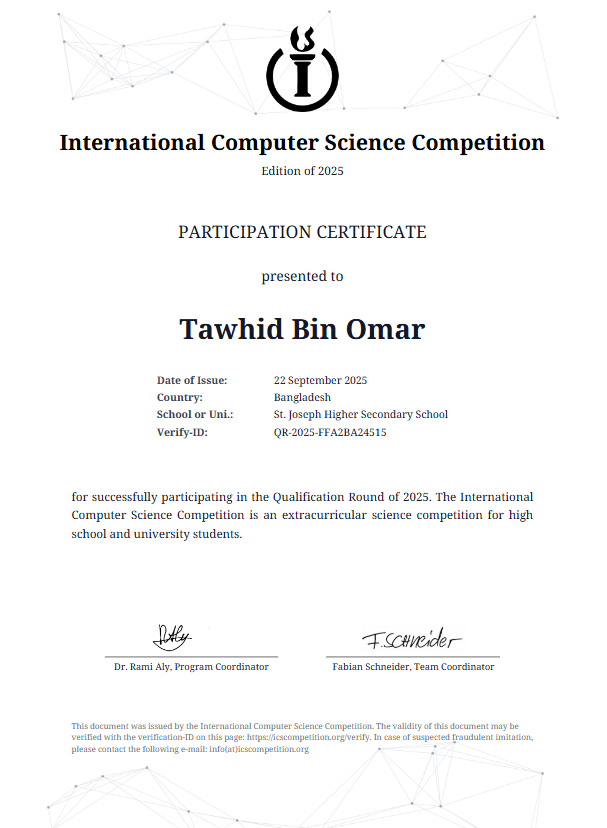
Completed CS50 and various bootcamps
Finished Sophomore year with an unweighted CGPA 4
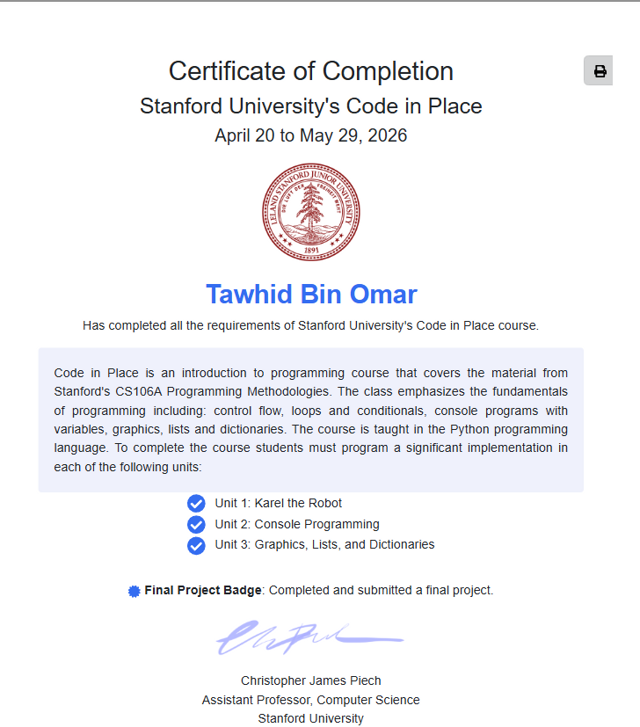
Completed Stanford Code In Place
Expected to graduate highschool
Helped 54117 Developers find answers to 85850 problems.
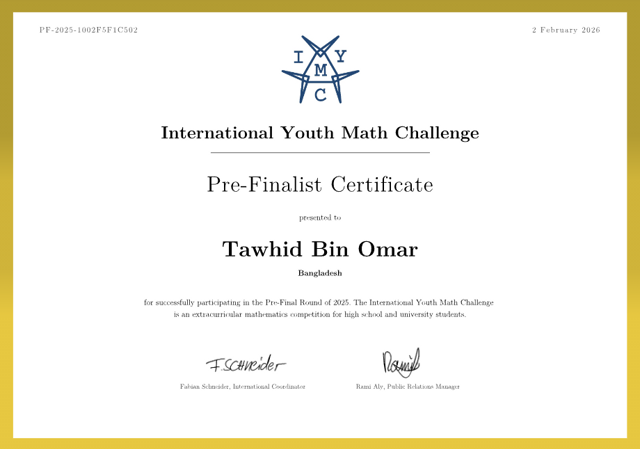
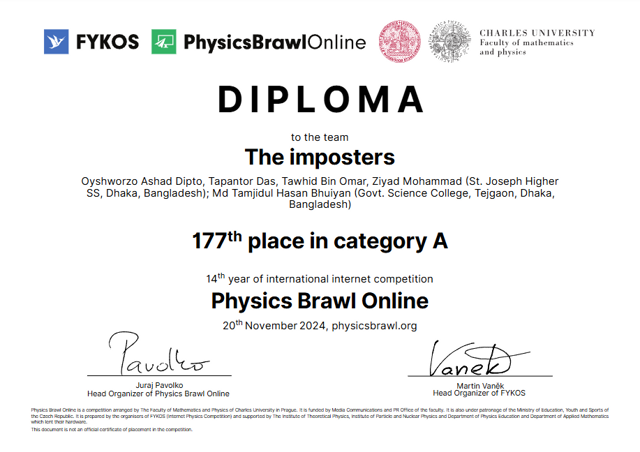
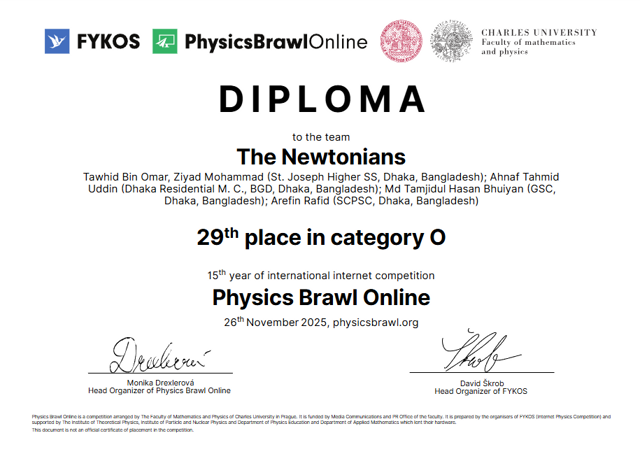
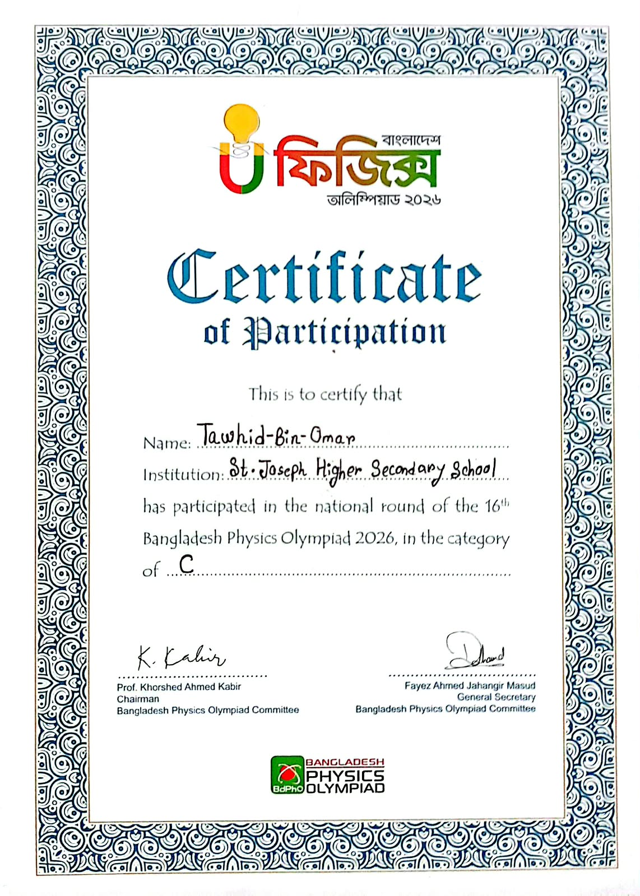
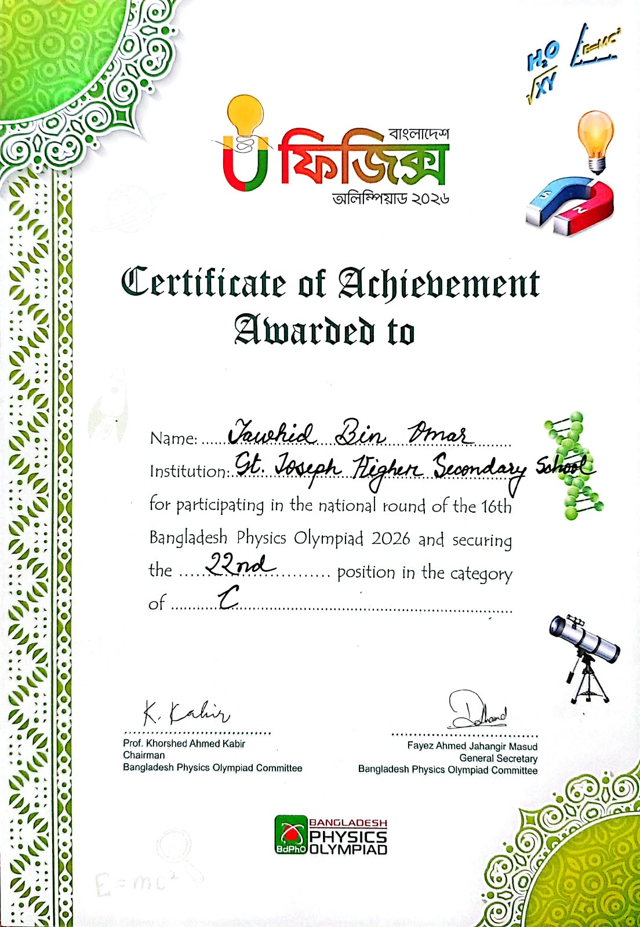
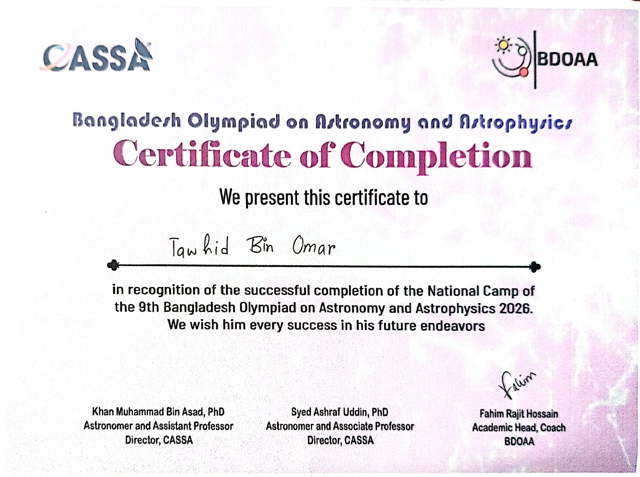
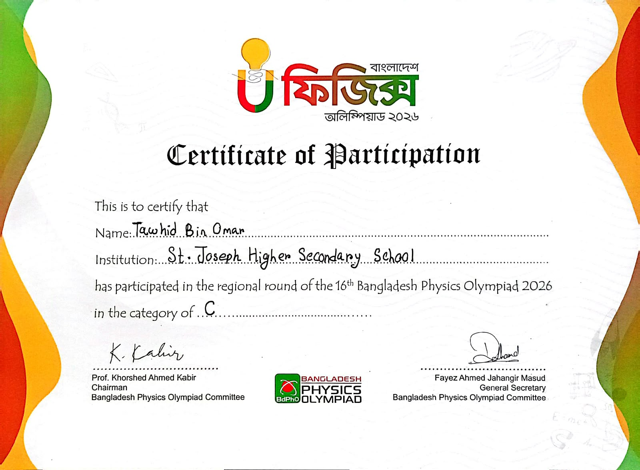
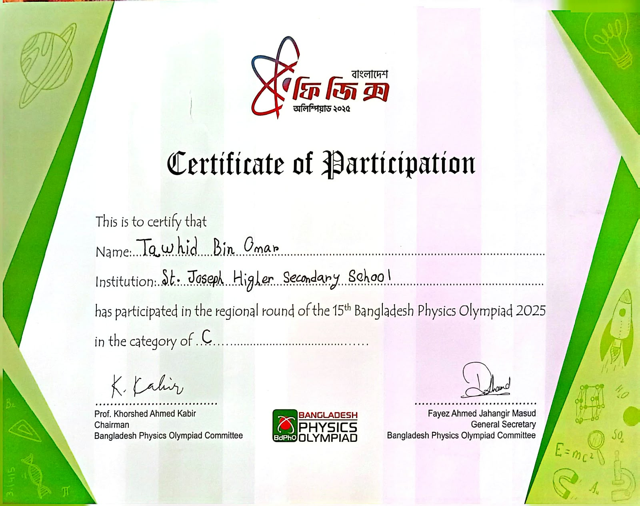
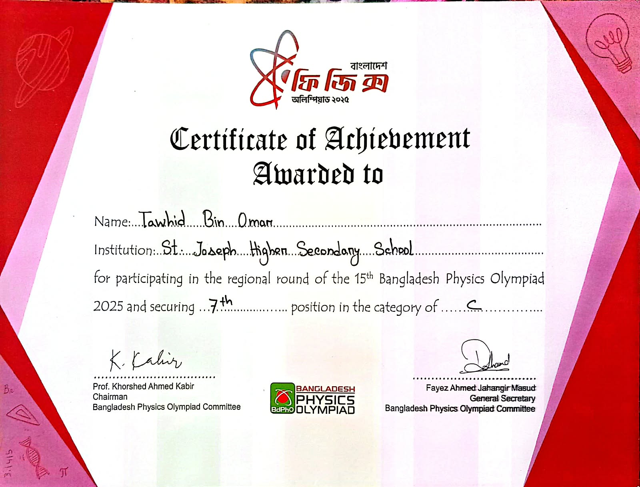
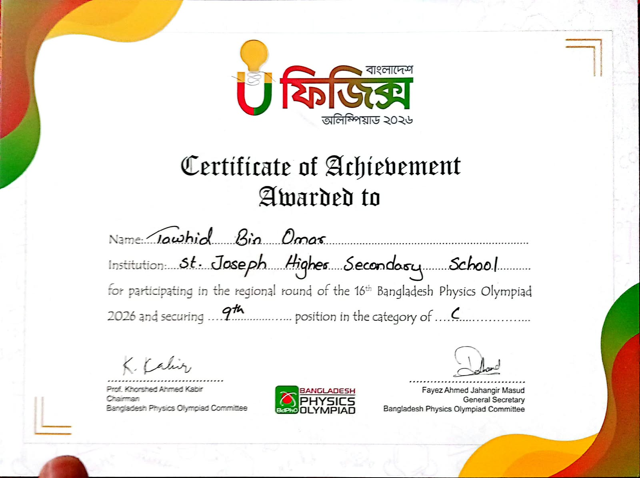
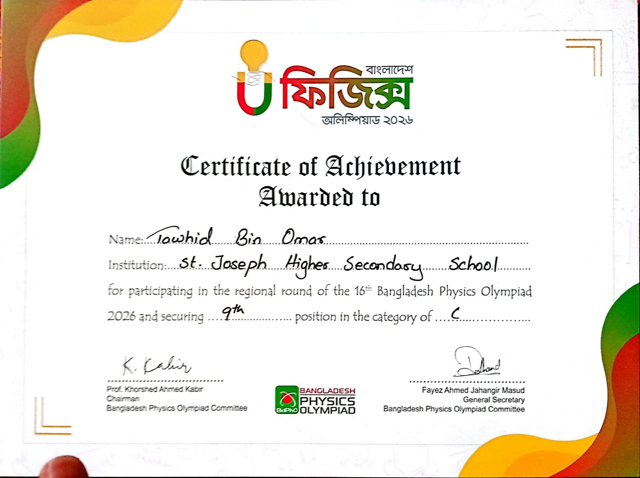
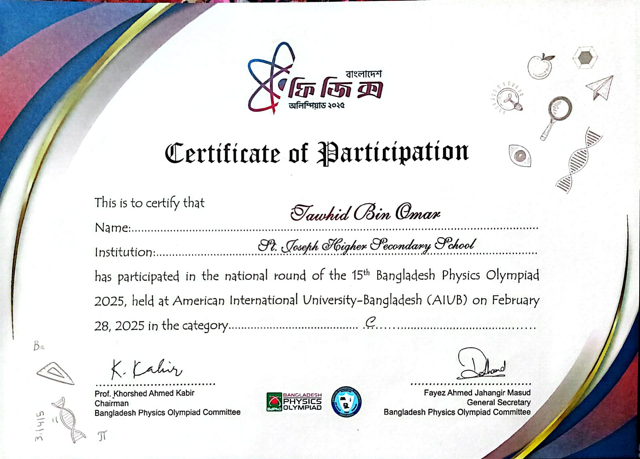
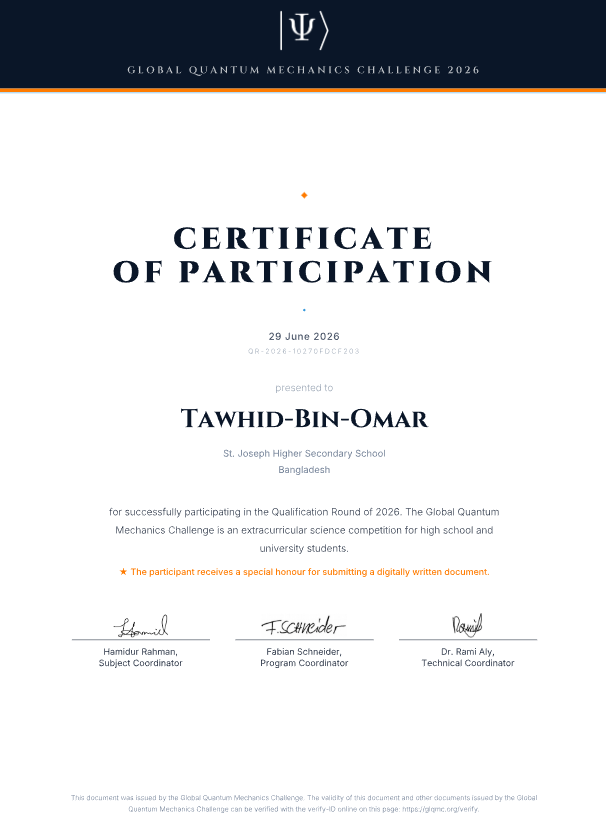
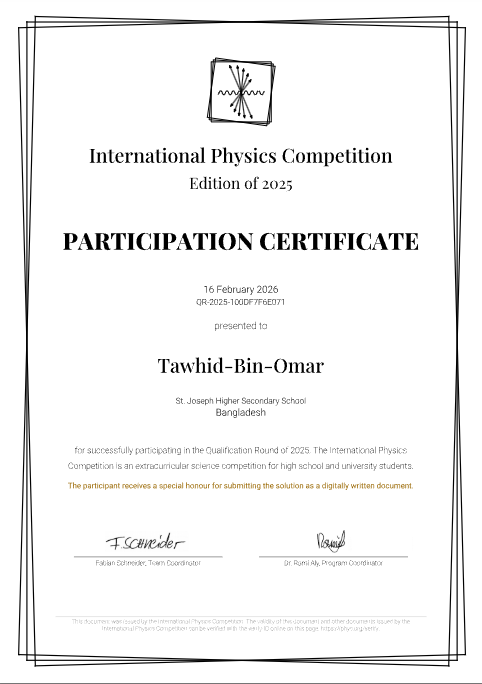
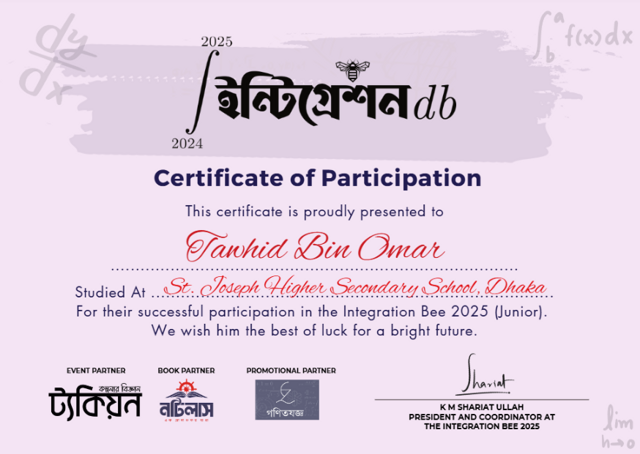
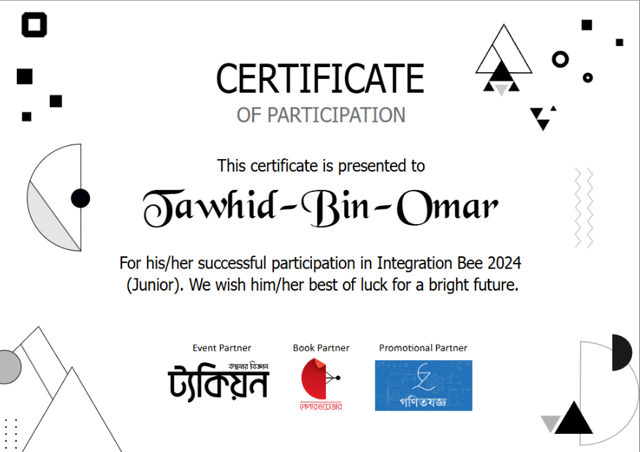
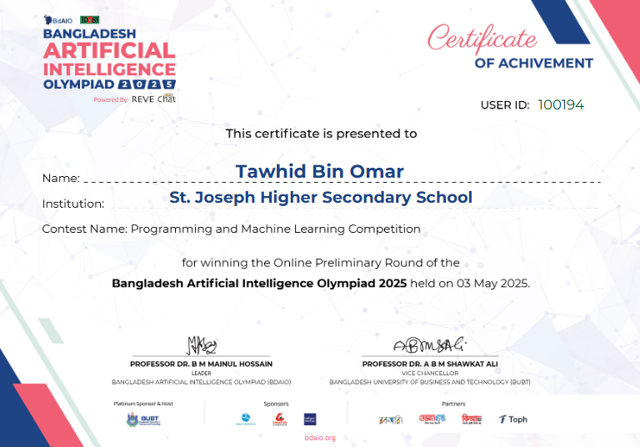
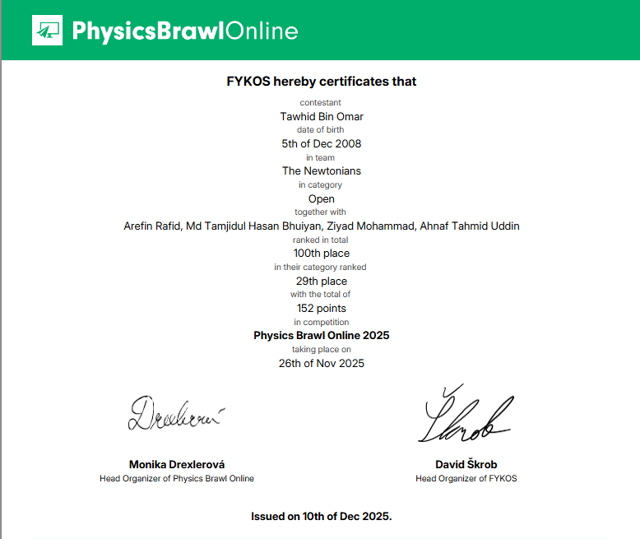
2x regional champ, 2x nationalist, 1x national champ, IPHO national camper
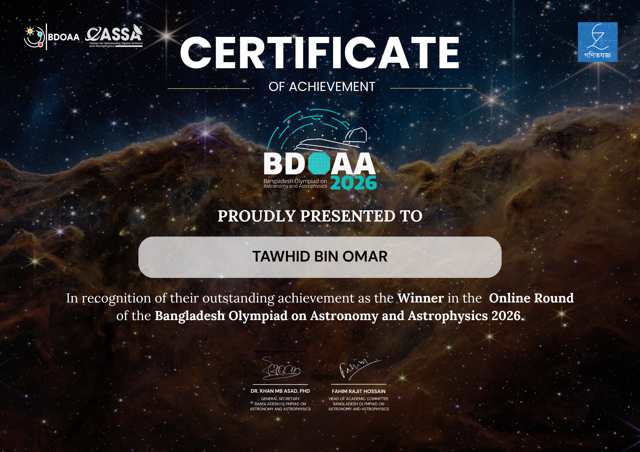
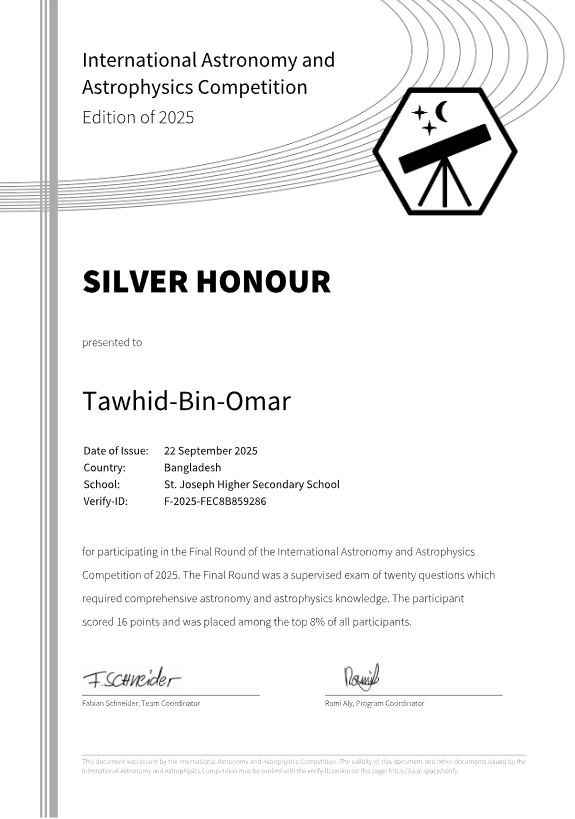
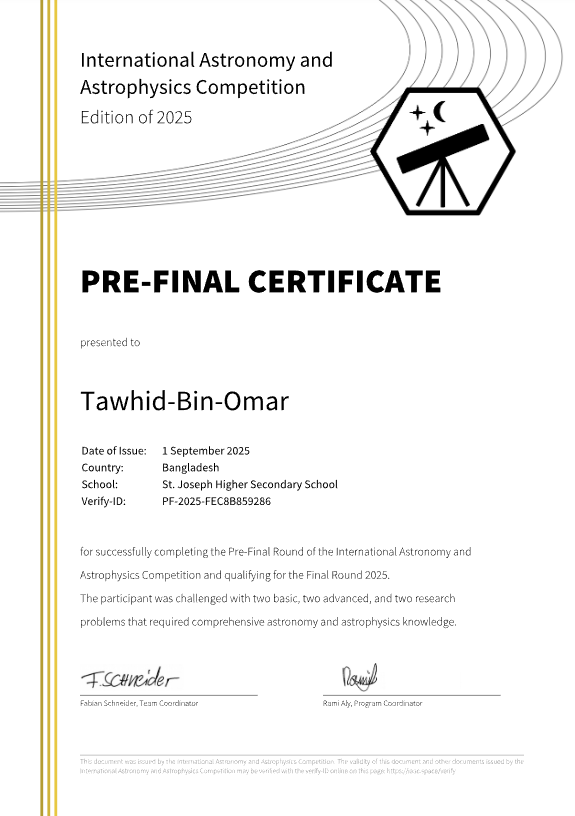
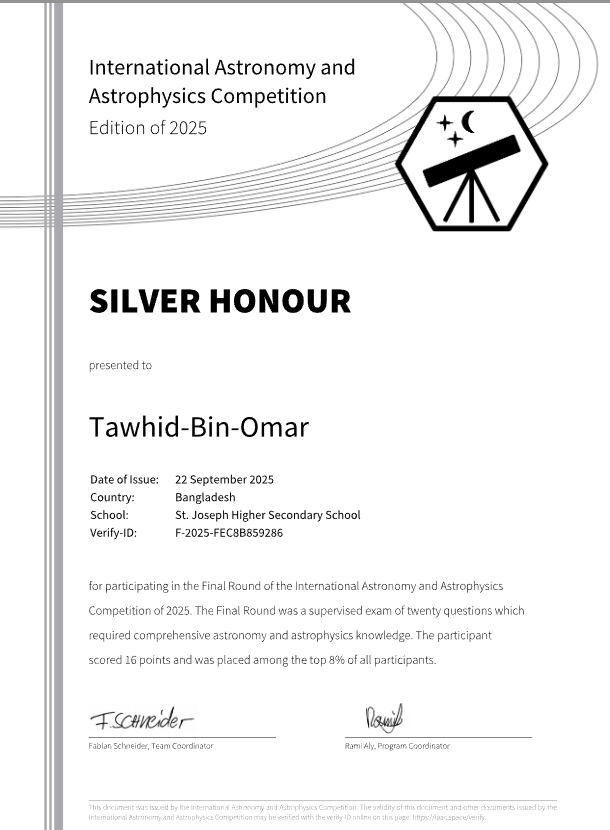
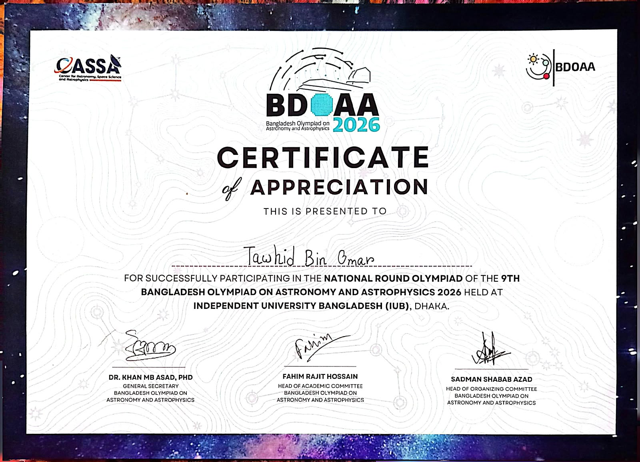
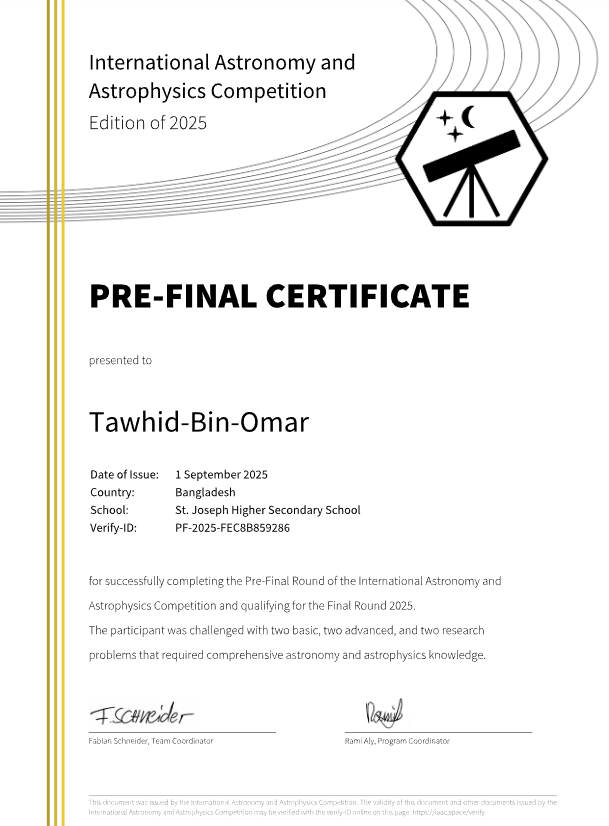
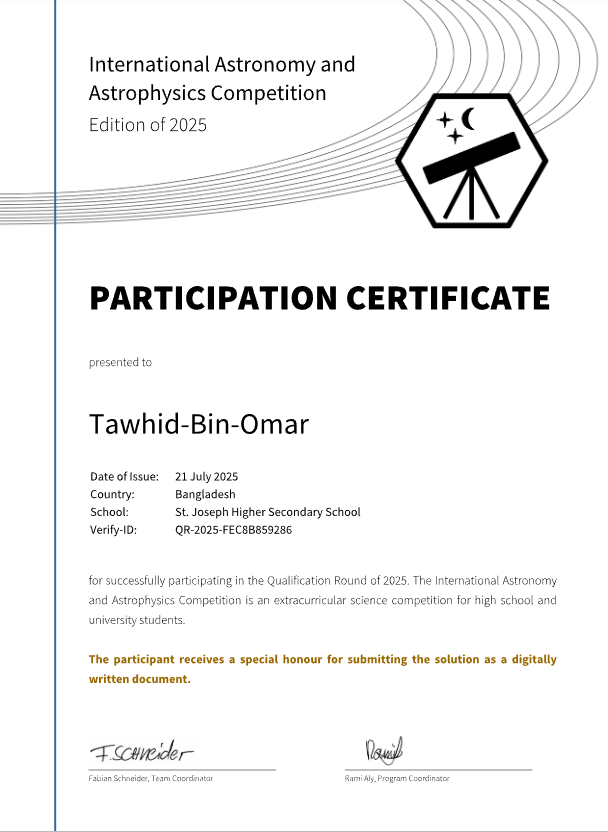
15th Nationally, IOAA camper
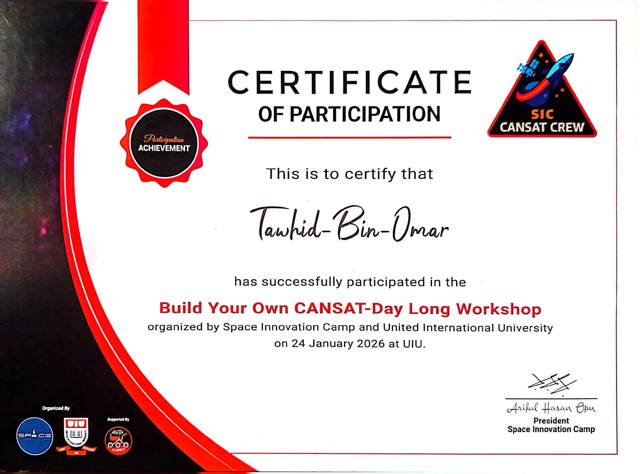
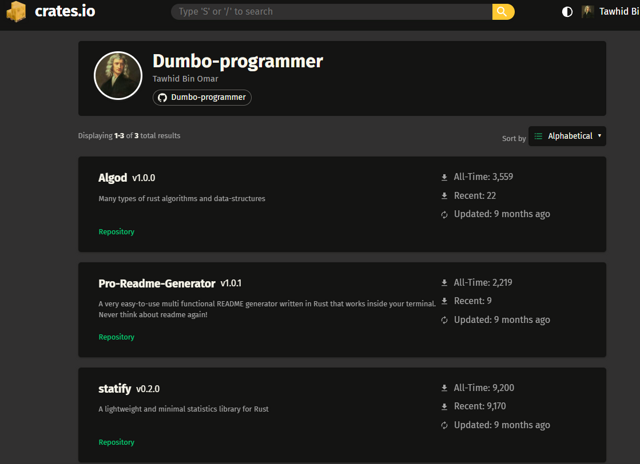
A collection of open-source Rust libraries for algorithms, data structures, statistics, and terminal-based README generation, published for the Rust ecosystem on Crates.io.
Why: Build practical, reusable Rust tooling that makes algorithms, statistical analysis, and project documentation easier to use.
For: Rust developers, systems programmers, students, and open-source maintainers.
Impact: Around 15,000 downloads across the published crates, helping Rust developers reuse focused libraries instead of rebuilding common functionality.
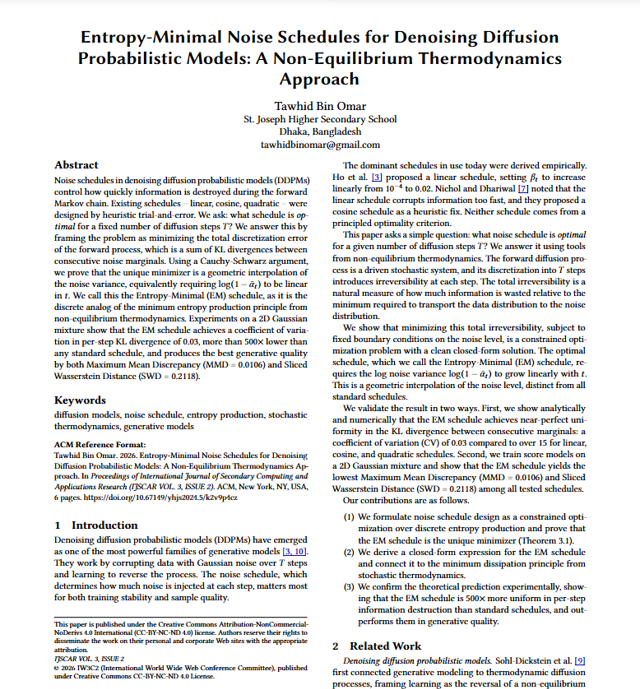
Published research applying non-equilibrium thermodynamics to diffusion-model noise schedules, examining entropy production and more efficient generative modeling.
Why: Connect statistical physics with machine learning to study how noise scheduling influences diffusion-model behavior.
For: Researchers and students exploring diffusion models, generative AI, and statistical physics.
Impact: Published research contribution at the intersection of thermodynamics, generative models, and stochastic processes.
A preprint comparing how common quantum channels geometrically distort quantum state space through an information-theoretic analysis.
Why: Use geometry and information theory to build clearer intuition for noise in quantum systems.
For: Students and researchers interested in quantum information and quantum noise.
Impact: Comparative framework for studying quantum channels, state-space geometry, and information loss.

Role: Lead Game Developer
2024 – Present
Led a 6-developer studio to design and launch an indie horror game with 230+ early players. Built a custom game engine combining 2D mechanics with realistic 3D visuals, implementing AI systems, procedural content generation, and performance-optimized rendering. Improved performance by 50–80% through custom optimization strategies. Managed the full development pipeline—80+ builds, 200+ commits, CI/CD automation, profiling, and cross-platform deployment (Windows/Linux). Leveraged the engine to create 4 additional trending Android games, with more than 10k+ active players.
Role: Academic Team Member
2025 – Present
Working as an academic team member at Ongko, contributing to educational initiatives and academic excellence.
Role: Academic Team Member
2025 – Present
Responsible for creating and maintaining the web application for Prothom Alo Gonit Ishkul, a bilingual math problem-solving platform. The platform provides a searchable archive of 100+ auto-gradable problems, balanced practice-test creation, timed test sessions, instant grading with rational-answer parsing, saved reviews, cloud sync, learner leaderboards, contest ratings, and offline support in Bangla and English.
Role: Mechanical Engineering Department Lead
2024 – Present
Co-founded and co-led a 4-member Robotics-for-Good R&D team (robotics-for-good) tackling accessibility, healthcare, and disaster response in underdeveloped regions. Designed and deployed 10–15 autonomous assistive systems, including robotic canes, HUD captioning glasses, spatial-audio hearing aids, and communication wearables. Led system integration, testing, documentation, and alignment with UN Sustainable Development Goals.
I believe the most impactful thing I can build is not software — it is infrastructure for learning. Every workshop, every handout, every mentorship session exists to answer one question: how do I make high-quality STEM education as accessible in a Dhaka classroom as it is anywhere in the world?

Leading mathematics problem-solving workshops for aspiring Olympiad students at St. Joseph Higher Secondary School, covering number theory, combinatorics, and geometry.
Why do I teach? Because in Bangladesh, a student's educational outcome is still largely determined by their postal code. A child in a Dhaka cantonment school has access to resources, trained teachers, and opportunities that a child in a rural literacy school does not. I believe that is a solvable problem.
I designed the Math Bootcamp and the Open Problem Solving Library to solve one specific problem: students in Bangladesh lack access to structured, high-quality problem-solving material that bridges the gap between school textbooks and Olympiad-level thinking. Every handout, every original problem, and every workshop is a piece of infrastructure designed to close that gap.
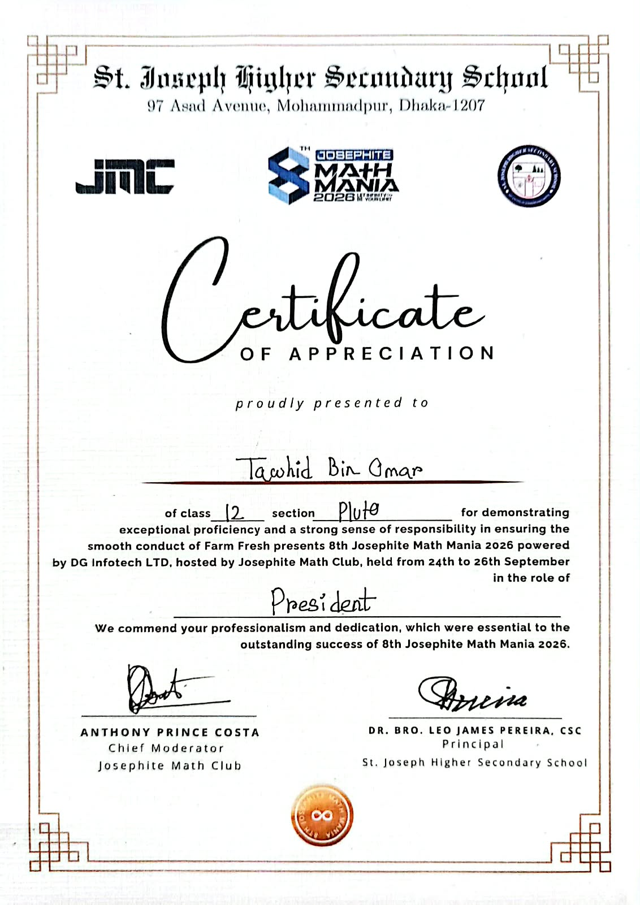
As President of the Josephite Math Club, I built programs that serve over 700 students across Dhaka — not just those preparing for Olympiads, but also students from under-resourced schools who attend our literacy program. The results are measurable: students who could not attempt an unfamiliar problem six months ago are now solving combinatorial proofs and writing code. That is the impact I care about.
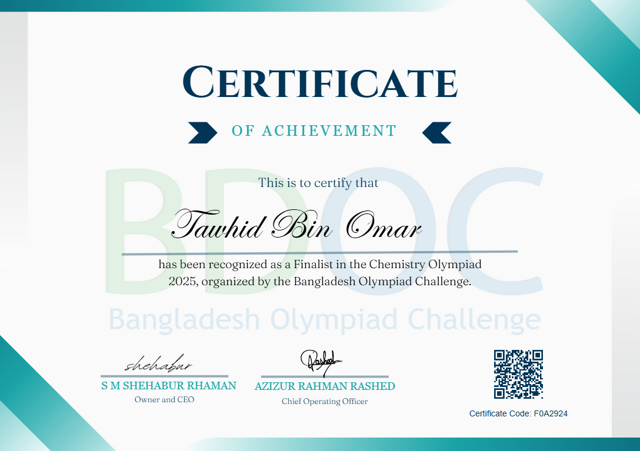
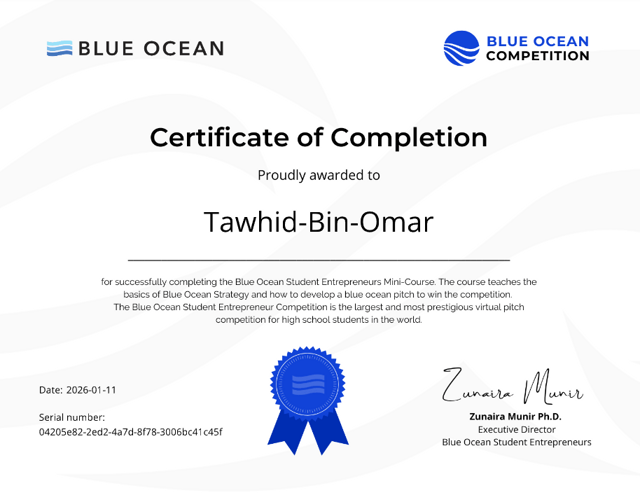
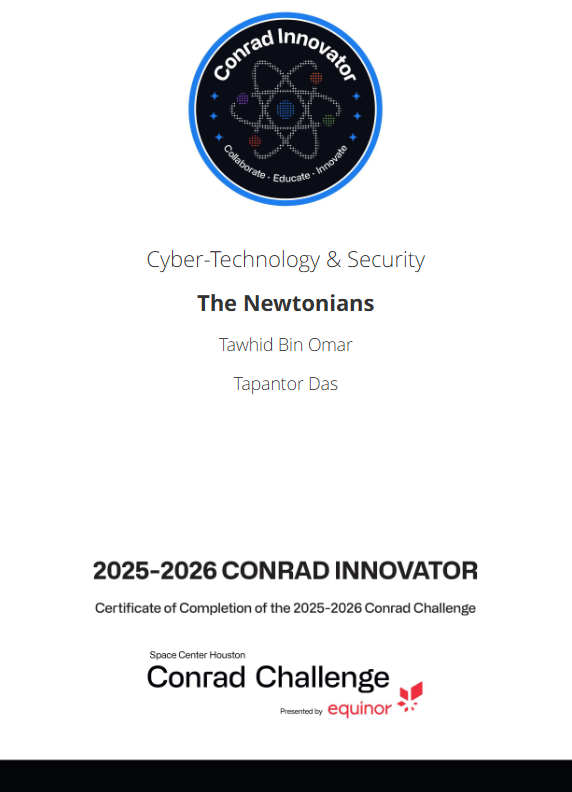
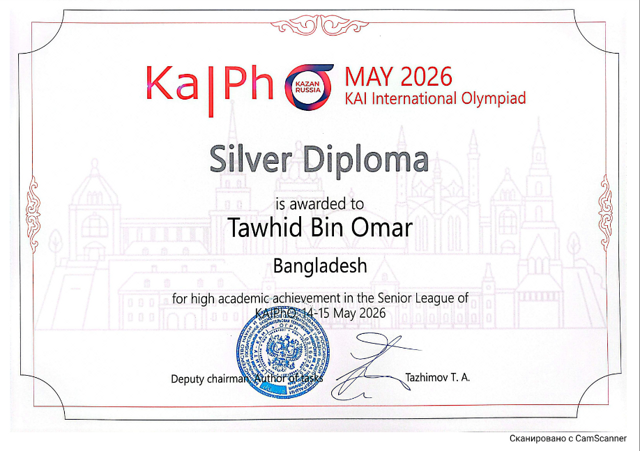
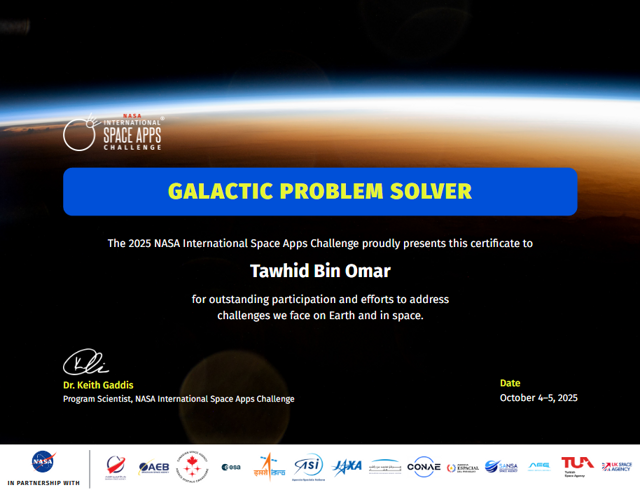
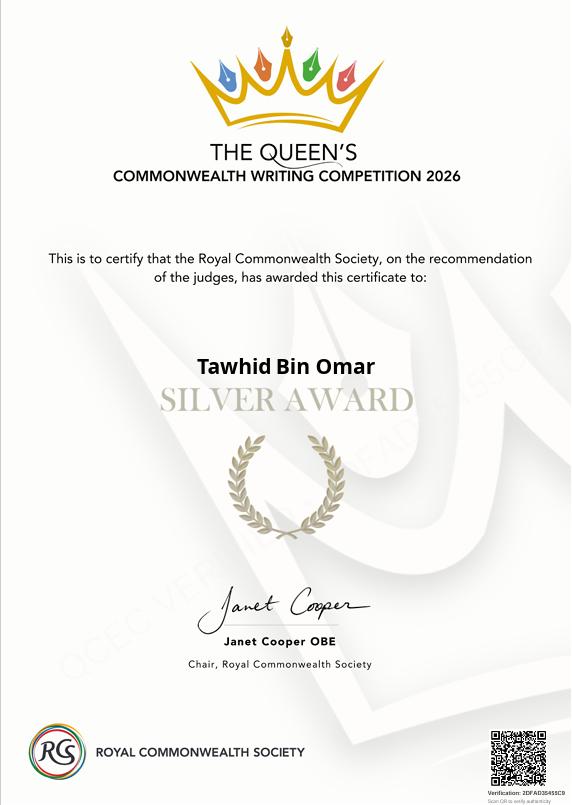
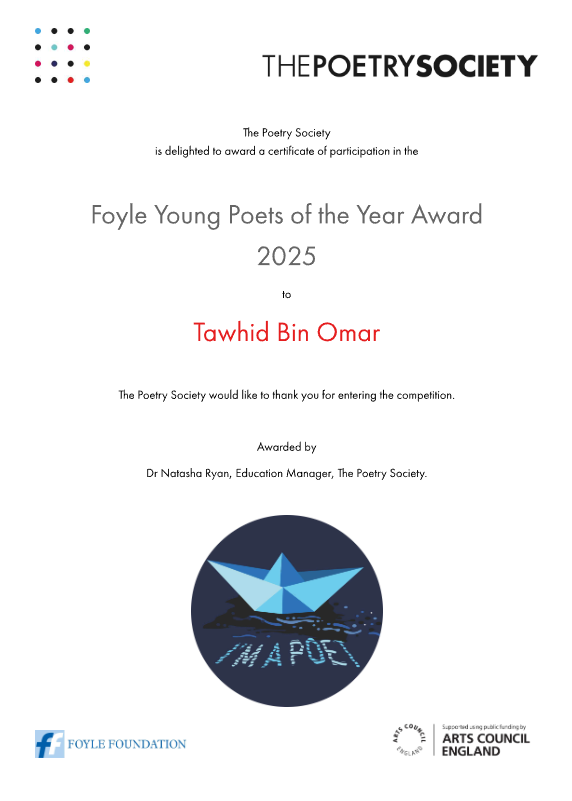
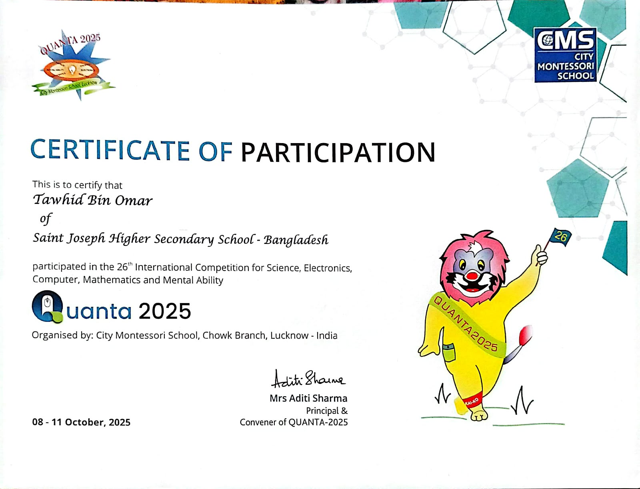
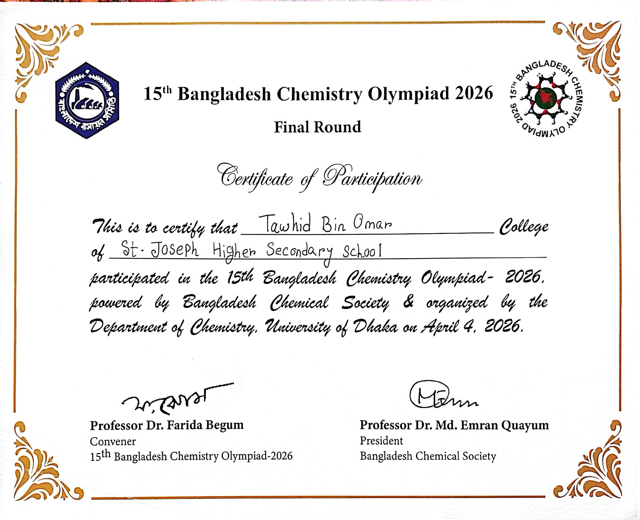
In 2026 I organized the 8th Josephite Math Mania, one of the biggest national math events in the country, with over 5000 participants and 22 events. Before that, as Vice President & Head of Academics (2024–2025), I helped host over 6 national math events. I have also completed Code in Place, did the Conrad Challenge, Blue Ocean Challenge, NASA Space Apps Challenge, and Green Challenge, was a finalist at the BDOC chemistry olympiad, got a silver diploma at KAIPHO hosted by Kazan National Research Technical University, received the Silver Award in the Queen's Commonwealth Writing Competition 2026 out of 53,840 people, and got recognition from the Poetry Society for writing poems.
Through the Open Problem Solving Library, I publish free, open-access educational resources in mathematics, physics, competitive programming, and astronomy — downloaded by students preparing for BdPhO, IOAA/BDOAA, national mathematics Olympiads, and anyone who simply wants to learn beyond their school syllabus. No paywall, no registration, no barriers.
The long-term vision is to build an open educational ecosystem for Bangladesh where knowledge is freely available, where curiosity is encouraged, and where every student has the opportunity to become the next generation of problem solvers, scientists, and innovators that Bangladesh needs. That is why I build.
Teaching programming and computational thinking to underprivileged students at the St. Joseph Literacy School, bridging the technology education gap.
Conducting hands-on programming workshops covering Python, C++, algorithms, and problem-solving for students at various skill levels.
Leading problem-solving workshops in number theory, combinatorics, geometry, and algebra for Olympiad preparation and beyond.
Mentoring students for national and international Olympiads in mathematics, physics, and astronomy through structured guidance and practice.
Building a free, open-access library of educational resources in mathematics, physics, competitive programming, and astronomy.
Writing original educational content in Bangla to make advanced STEM topics accessible to Bengali-speaking students.
Developing curricula, handouts, and teaching guides to help educators deliver high-quality STEM education in classrooms and clubs.
Encouraging and mentoring students to undertake independent research projects in STEM fields, fostering a culture of inquiry.
Distributing free, high-quality study handouts covering essential topics in mathematics, physics, and programming to students nationwide.
Curating and creating open educational resources that are freely accessible to anyone with an internet connection, removing financial barriers to learning.
Education, at its best, is not about transferring information from one mind to another. It is about creating the conditions for curiosity to flourish, for questions to be asked without fear, and for young people to discover that they are capable of far more than they imagined.
In Bangladesh, access to quality STEM education remains deeply uneven. A student in a well-resourced school may have opportunities that a student in an underfunded one can only dream of. This gap is not a reflection of ability — it is a reflection of circumstance. And circumstance can be changed.
The objective is not merely to teach mathematics or physics or programming. It is to help students become independent thinkers who can identify problems, reason through them, and create solutions — whether in science, technology, or everyday life. A student who learns to solve a geometry problem with clarity and persistence has learned something that transcends the subject itself.
Every workshop, every handout, every mentoring session is an investment in that idea. The goal is not recognition. It is to build, one student at a time, a culture of scientific thinking and problem solving that will outlast any individual effort.
The long-term aspiration is to help build an open educational ecosystem for Bangladesh — one where high-quality learning resources are freely available, where teachers are supported with curricula and training, and where every student, regardless of where they live or what school they attend, has a genuine opportunity to develop their potential in STEM.
This means developing openly licensed textbooks and problem sets in both English and Bangla. It means creating structured pathways from foundational mathematics to advanced Olympiad-level problem solving. It means training teachers and club leaders who can carry this work into their own communities. And it means building platforms and tools — like the Open Problem Solving Library — that make these resources discoverable and accessible to anyone with an internet connection.
None of this will happen overnight. But every resource published, every workshop delivered, and every student who discovers the joy of solving a difficult problem brings this vision closer. The work is open, the invitation is standing, and the door is open to anyone who shares this commitment to building a stronger culture of learning in Bangladesh.
This work is larger than any one person. Whether you are a student eager to learn, a teacher looking for resources, a school seeking a partnership, or a professional who wants to give back — there is a place for you here. The goal of making high-quality STEM education accessible across Bangladesh requires a community. Let us build it together.
Built so that no student in Bangladesh is held back by the cost of educational resources. Free, open-access, always.
Quantum physics from wave-particle duality to the Schrödinger equation.
Functors, natural transformations, and universal properties.
Einstein field equations, spacetime curvature, and applications.